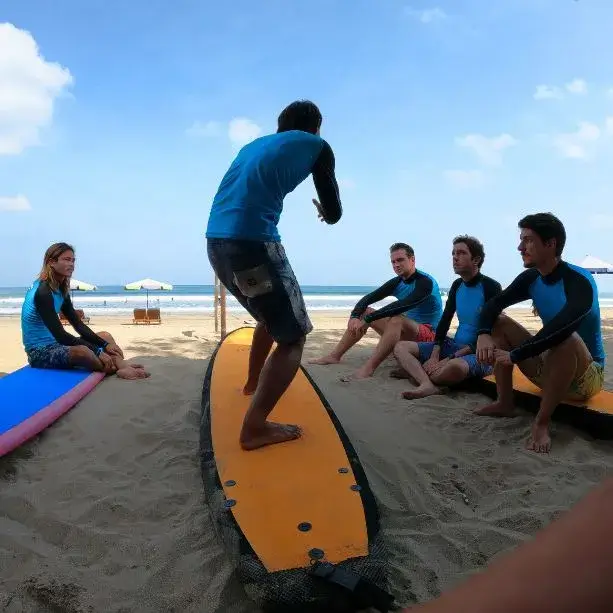
Where to Surf in Bali for Beginners: The Safest Sandy-Bottom Beaches (No Reef Cuts!)
You want to learn how to surf in Bali, but you are terrified of crashing onto sharp coral reefs. This guide will show you exactly where to find the safest, most forgiving sandy-bottom waves on the island so you can stand up on your board without a single scratch.
I am Wayan Jhon. I was born right here in Bali and have spent years working in the local tourism industry, from driving travelers across the island to guiding them through our local culture. Over the years, my team and I have seen too many beginners get pushed into heavy reef breaks they weren’t ready for, simply because of misleading marketing online. We built HelpfulBali to give you honest, on-the-ground reality.
Ready to find your perfect, safe beginner wave? Let’s dive right in.
The Sand vs. Reef Dilemma: Why Your First Session Needs Soft Ground
As an absolute beginner, you are going to fall off your surfboard. A lot. This is a completely normal part of the learning process!
When you fall at a sandy-bottom beach, you simply splash into the water and stand up on soft sand. However, falling on a shallow coral reef break can result in painful cuts, scrapes, and ruined holiday plans.
By starting your journey on sandy beaches, you completely eliminate the fear of injury. You can focus 100% of your energy on practicing your paddling, perfecting your pop-up posture, and having pure, uninterrupted fun.
The 4 Safest Sandy-Bottom Surf Spots in Bali
If you are wondering exactly where to surf in Bali for beginners, these four sandy-bottom destinations should be at the very top of your list:
1. Kuta Reef & Beach: The Famous 5-Kilometer Stretch of Pure Sand
Stretching all the way from the airport up to Seminyak, Kuta Beach is the birthplace of Bali surfing.
The ocean floor here is pure, soft sand with absolutely no rocks or coral. The waves break in neat, orderly lines, creating gentle “white-water” (waves that have already broken) that provides the perfect pushing force to help you stand up on your very first day.
Local Tip: Kuta is highly accessible and features world-class beginner infrastructure, including certified local lifeguards patrolling the shores to keep you safe.
2. Legian & Seminyak Beach: Spacious Peaks with Gentle White-Water
Located just north of Kuta, Legian and Seminyak offer a slightly more relaxed, less-crowded alternative while sharing the exact same safe, sandy-bottom geography.
The waves here break over shifting sandbanks, offering highly supportive, crumbling white-water. Because the beach is so wide, you will have plenty of space to practice your pop-up without worrying about colliding with other learners.
Local Tip: Legian is home to some of Bali’s most established, premium surf schools (like UP2U Surf School) which specialize in highly structured safety briefings and technical coaching.
3. Batu Bolong (Canggu): The Deep-Water Longboard Haven
Canggu is the vibrant lifestyle hub of Bali’s surf scene. While nearby spots like Echo Beach feature challenging reef breaks for intermediate and expert riders, Batu Bolong is a sanctuary for beginners and longboarders.
The wave mechanics at Batu Bolong are uniquely forgiving. The wave peaks up, gently dies out, reforms, and peaks up again several times on a single ride. This creates a very slow, soft-rolling wave that gives absolute beginners plenty of time to find their balance and get to their feet.
Local Tip: Batu Bolong is technically a deep-water semi-reef break, but it is incredibly deep and behaves exactly like a soft beach break. To beat the heavy crowds, book a sunrise session at 6:00 AM to enjoy clean, glassy water.
4. Pantai Muaya (Jimbaran Bay): The Ultimate Safety Valve for Big Swells
Jimbaran Bay is famous for beachfront seafood dinners, but it also serves as the island’s ultimate surfing “safety valve”.
When a massive swell hits Bali and turns places like Canggu and Kuta into wild, unmanageable monsters, Jimbaran Bay remains completely calm. Because the bay is deeply protected by the Bukit headland, it drastically cuts the size of incoming swells, turning scary waves into tiny, gentle, knee-high rollers.
Local Tip: Pantai Muaya is highly recommended for young kids, families, and nervous first-timers who are deeply anxious about the power of the ocean.
Graduating to Reef: Safe Transitioning at Baby Padang
Once you have mastered the basics on the sand and feel 100% comfortable standing up, you might want to experience the sensation of surfing over a reef.
The absolute best place for this transition is Baby Padang (Padang Padang Right), located in the stunning Bukit Peninsula. Situated just inside the heavy, expert-only “Padang Padang Left” reef break, Baby Padang is a soft, gentle reef wave that welcomes beginners.
It offers a soft right-hand wave that fades directly into a deep-water channel, making the paddle back to the lineup incredibly easy and saving your arm energy. It is the perfect classroom to build your confidence on reef structures in a highly controlled environment.
Three Vital Rules for First-Time Surfers
To make sure your first surf experience in Bali is safe, fun, and hassle-free, keep these local tips in mind:
- Always Use a Soft-Top Foam Board: When learning, do not use a hard fiberglass surfboard. Premium beginner schools use large soft-top foam boards, which are highly buoyant, stable, and much safer if the board accidentally bumps into you.
- Wear a Long-Sleeved Rash Guard: This protects your skin from the intense tropical sun and prevents painful chest rashes caused by rubbing against the wax on the board.
- Learn with a Certified Local Instructor: While renting a cheap board on the beach is easy, surfing is a sport of currents and tides. A qualified local guide knows exactly where the safe channels are, how to read the waves, and will physically push you into the waves so you can focus entirely on standing up.
Where to surf in Bali for Beginners (Video Guide)
Let’s Wrap This Up (The TAC Process)
Learning to surf should be an absolute blast, not a terrifying struggle against sharp coral reefs or misleading property ads. By choosing a safe, sandy-bottom beach and the right coaches, you will be standing up and riding waves on your very first day.
Which of these sandy beaches are you planning to visit first on your Bali trip? Is it the classic Kuta Beach or the laid-back vibe of Batu Bolong in Canggu? Let us know in the comments below!
If you want to bypass the endless search and find a highly patient, verified local surf school or an all-inclusive camp to guide you safely in the water, check out our curated list of the Best Beginner Surf Camps in Bali right now!