Glamping vs. Traditional Camping in Bali: An Honest Comparison
When people dream of Bali, they usually picture sun-kissed beaches, surf boards, and humid jungle walks. But head up into the island’s highland interior—where the elevation climbs above 1,000 meters—and you will find a completely different world. Up here, the air is crisp, the nights are chilly, and the volcanic landscapes are absolutely jaw-dropping.
If you want to experience Bali’s wild, mountain side overnight, you have two very different paths to choose from: luxury glamping or traditional, back-to-basics camping.
But which one is right for your travel style?
Should you book a fully insulated wooden cabin with a private geothermal hot spring jacuzzi, or are you better off pitching a dome tent on a grassy ridge, roasting sweet potatoes over an open bonfire with the locals?
In this honest guide, we will break down the real, on-the-ground differences between glamping and traditional camping in Bali—including costs, comfort levels, toilet situations, and local realities—so you can plan your perfect mountain escape.
Let’s dive in.
1. Glamping in Bali: The Pampered Wilderness
Glamping (short for “glamorous camping”) has completely exploded in Bali over the last few years, particularly in the volcanic caldera of Kintamani and the misty valleys of Bedugul. It is designed for travelers who want to be surrounded by raw nature without actually having to “rough it.”
What the Experience is Actually Like
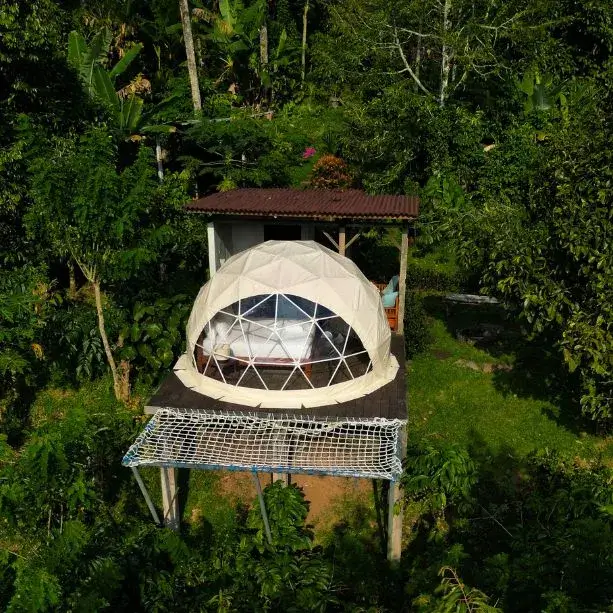
When you book a glamping stay in Bali, you are essentially staying in a boutique hotel room that happens to have canvas walls or a geodesic dome structure.
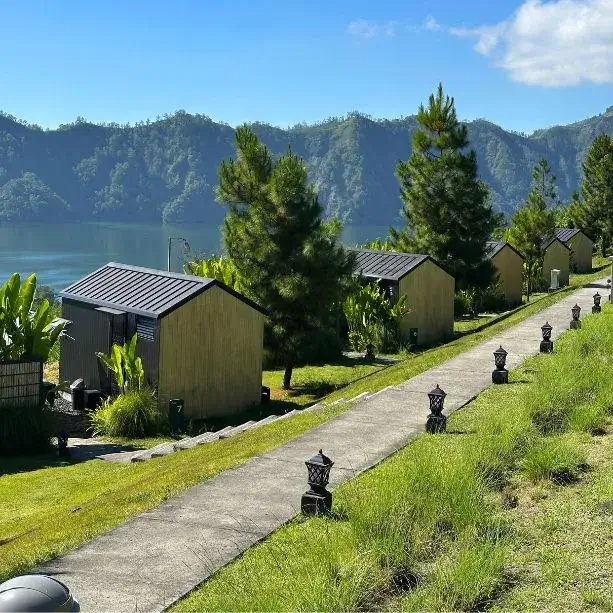
You arrive, park on a paved road, and walk into a beautifully decorated space. You will sleep on a real, king-sized mattress with high-thread-count sheets, fluffy pillows, and thick duvets to protect you from the chilly 15°C (59°F) mountain nights. Most high-end glamping spots (like Bobocabin or Toteme) feature modern luxuries like private en-suite indoor bathrooms, hot running water, smart-lighting, high-speed Wi-Fi, and even private volcanic hot spring pools directly on your deck.
The Real On-The-Ground Friction
While it sounds like absolute paradise, glamping has its own set of unique realities:
- The Price Tag: Luxury doesn’t come cheap. Glamping in Bali typically costs anywhere from Rp 800.000 to Rp 2.500.000+ ($50 – $160+ USD) per night.
- A “Sanitized” Nature Experience: Because you are enclosed in a solid, well-insulated structure, you might feel slightly disconnected from the raw elements. It feels more like a resort and less like a rugged outdoor adventure.
- Pre-Booking is Mandatory: The top-rated glamping sites in Bali have very limited tents (often only 5 to 10 domes per property) and sell out weeks in advance.
2. Traditional Camping in Bali: The Raw Connection
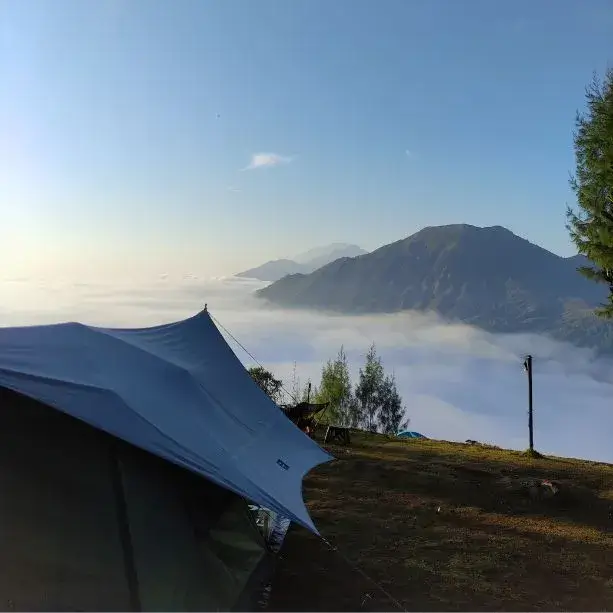
Traditional camping in Bali is not about luxury; it is about absolute connection—to the land, to the local community, and to the elements. This is the path for true adventurers who want to wake up, unzip their tent door, and see the sunrise breaking over a sea of clouds.
What the Experience is Actually Like
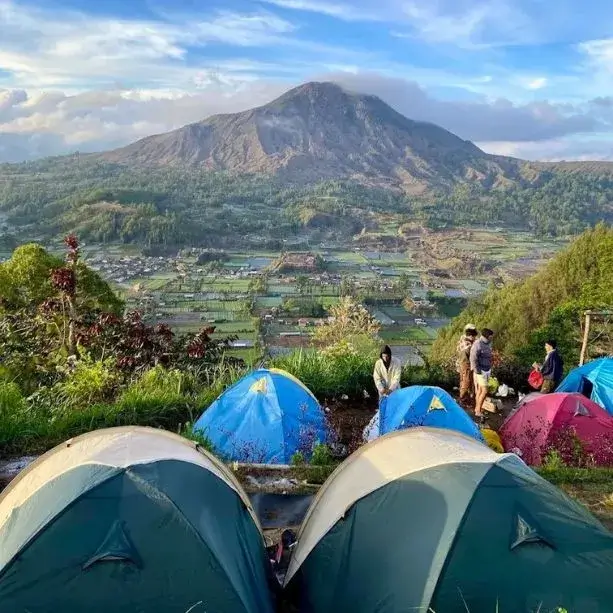
Traditional camps are usually perched directly on the high, grassy ridges of the Mount Batur caldera (like Alengkong Bali Camp or Sukawana Sunrise Spot) or on coastal cliffs (like Bukit Asah in East Bali).
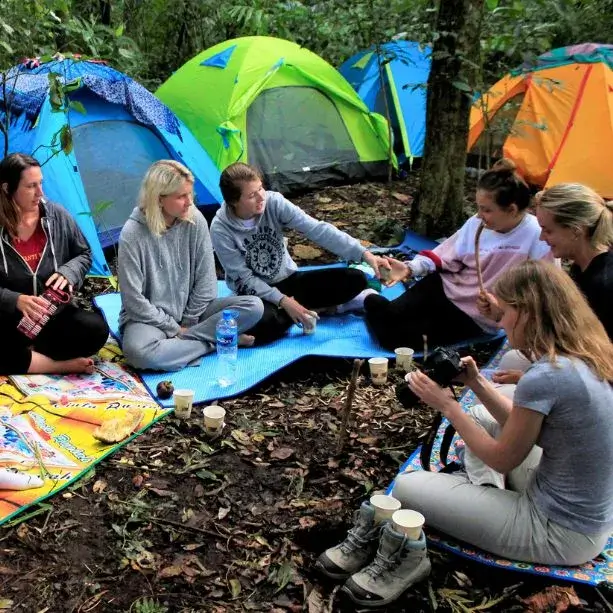
You sleep in a basic, single-layer dome tent set up on a wooden deck or directly on the grass. You will sit around a crackling bonfire at night, roasting sweet potatoes, drinking local Arak or hot ginger tea, and sharing stories with Balinese camp hosts. The atmosphere is deeply social, warm, and authentic. In the morning, you wake up at 5:45 AM to see the valley drowned in a thick, fairytale blanket of morning fog, with the active volcanoes silhouetted against a golden sky.
The Real On-The-Ground Friction
If you choose traditional camping, you must prepare for the realities of the Balinese outdoors:
- Shared and Basic Bathrooms: Private bathrooms do not exist here. You will be using shared, outdoor toilet blocks. The water is usually piped straight from mountain springs, meaning it is icy cold—taking a shower at 6:00 AM is a test of true courage!
- Rugged Road Access: Many of these ridge-top camps are accessed via steep, narrow, and unpaved dirt tracks. If you are riding a scooter or driving a front-wheel-drive automatic car, navigating these roads can be highly intimidating.
- The Element of Cold: Basic canvas tents have zero heat insulation. If the mountain winds pick up and the dew is heavy, your sleeping bag can feel damp and cold.
3. Side-by-Side Comparison: Glamping vs. Camping
To help you visualize the trade-offs, here is our honest, on-the-ground comparison of what you actually get:
| Feature | ⛺ Traditional Camping | 🛌 Luxury Glamping |
|---|---|---|
| Average Cost | Rp 150.000 – Rp 350.000 ($10 – $22 USD) | Rp 800.000 – Rp 2.500.000 ($50 – $160+ USD) |
| Bedding | Mat on the floor, sleeping bag, basic pillow | King-sized mattress, luxury sheets, warm duvets |
| Bathrooms | Shared outdoor toilet blocks, icy-cold water | Private en-suite indoor bathroom with hot water |
| Road Access | Often steep, rugged dirt tracks and gravel roads | Paved roads with easy car parking |
| Vibe & Spirit | Cozy bonfires, local family hosts, raw nature | Private, romantic, peaceful, and self-contained |
| Weather Protection | Basic (tents can get damp; winds can be loud) | High (fully sealed, wind-insulated cabins/domes) |
| Food & Dining | Simple hot kitchen (instant noodles, local coffee) | On-site restaurants, cafes, and room service |
Final Verdict: Which is Best for You?
So, which one should you choose for your Bali adventure? Let’s keep it simple:
- Go Glamping if: You are traveling with a partner on a romantic getaway, want the comforting warmth of a private hot spring jacuzzi, hate the idea of shared toilets, and want to experience the mountains without sacrificing five-star resort comfort.
- Go Traditional Camping if: You are on a budget, want an authentic cultural connection with local Balinese hosts, love stargazing around a shared campfire, and want the absolute highest-altitude, front-row seats to the morning “sea of clouds” right from your tent deck.
Frequently Asked Questions (FAQ)
Ready to Plan Your Island Escape?
Explore our fully verified, independent directories to find your perfect base:
- Want luxury domes, smart cabins, and private hot spring jacuzzis? Find your perfect volcanic retreat in our Luxury Glamping in Kintamani Directory.
- Looking for clifftop views and cozy bonfires above the clouds? Compare the best spots in our Epic Sunrise Camps in Bali Directory.
- Ready to swap the cold mountain winds for lush, tropical rainforests? Discover the best retreats in our Ultimate Jungle Camps in Bali Directory.
Do you have any personal questions about Kintamani’s mountain weather, road access, or planning your outdoor itinerary? We are here to help you get it right. Head over to our Contact Us Page or shoot us an email directly at hello@helpfulbali.com, and we will happily help you plan your perfect Bali escape!